 EN

Fiberglass Handles for Agricultural Tools: Shovels, Rakes, Hoes, and Pruners
I have been making fiberglass handles for agricultural tools since before most of the buyers emailing me were born. Fiberglass handles were the ugly duckling of the tool shed for a long time. Cheap plastic-looking things, people said. Then the wood rotted out for the third time in five seasons and suddenly everyone wanted to talk.
That is the short version of this whole industry.
In 2009 I shipped a trial order of fiberglass handles to a European garden tool brand. Two thousand pieces. They came back six months later with a complaint letter I still keep in my desk drawer. Not because the handles broke. Because they didn't break. The end users kept the tool for fifteen years, the brand said, and that was bad for repeat sales. I laughed for a week.
Anyway. If you buy, specify, or manufacture shovels, rakes, hoes, or pruners, this is the stuff I would tell you over a factory-floor coffee, except you don't have to fly to Chongqing to hear it.
Why wood still loses, every single season
Wood is beautiful. I'll give it that. Hickory has a warmth you can't fake, and a well-oiled ash handle feels right in the hand in a way plastic never will.
None of that matters when it's February, the ground is frozen hard as concrete, and your shovel head is wedged under a root ball.
Steel's 200 times stiffer than wood by weight ratio comparisons get thrown around a lot, but the real killer for wood isn't stiffness, it's moisture cycling. The handle soaks up rain in autumn, dries out in summer, and the grain opens up. Then it snaps at the socket. It always snaps at the socket. I've seen it happen on three continents and the pictures all look the same.
Fiberglass doesn't care about rain. It doesn't care about the fertilizer sitting in your barn, which, by the way, is acidic enough to eat untreated wood in about two wet winters.
Rot doesn't happen. There's no grain, so there's no weak direction. You can leave fiberglass handles leaning against a wet shed wall for a decade and pick them up and use them.
Old Wang, who'd been on our pultrusion line since before I had a company car, used to leave test handles in a bucket of water outside the workshop just to annoy the sales guys. "Still good," he'd say, every Monday, for three years. We only stopped because the bucket rusted through.
How we actually make a fiberglass handle
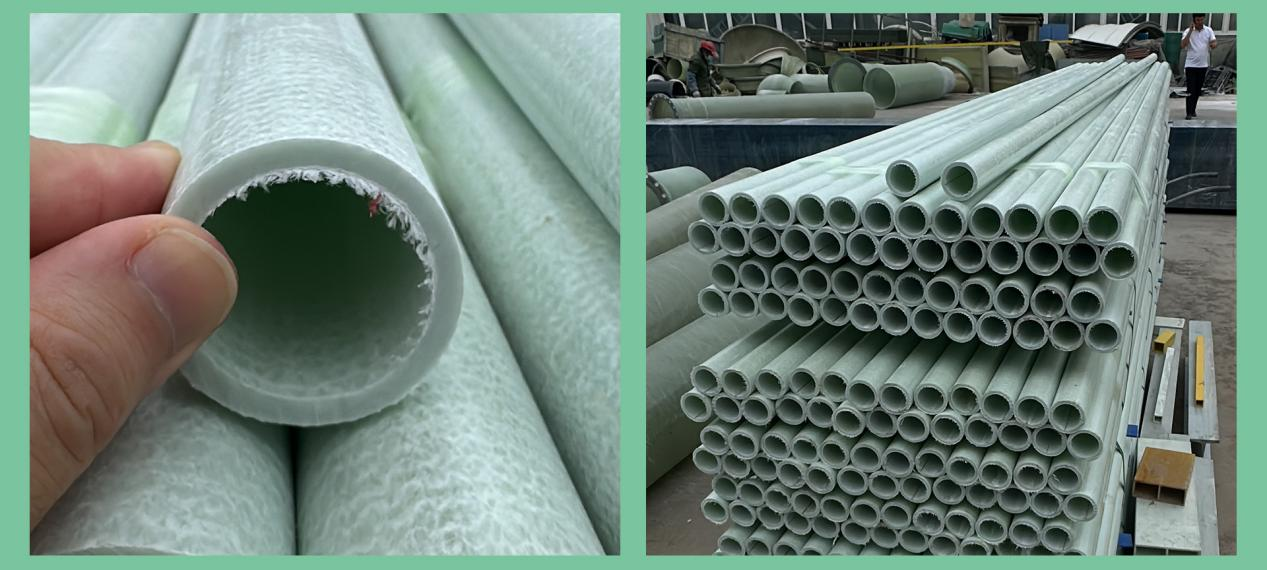
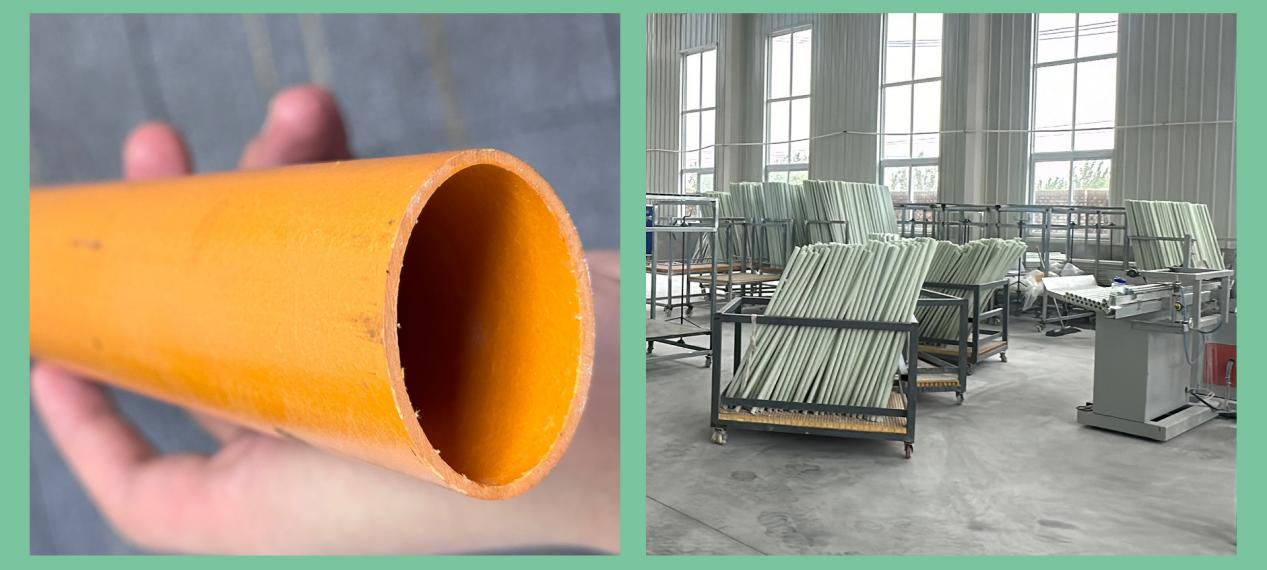
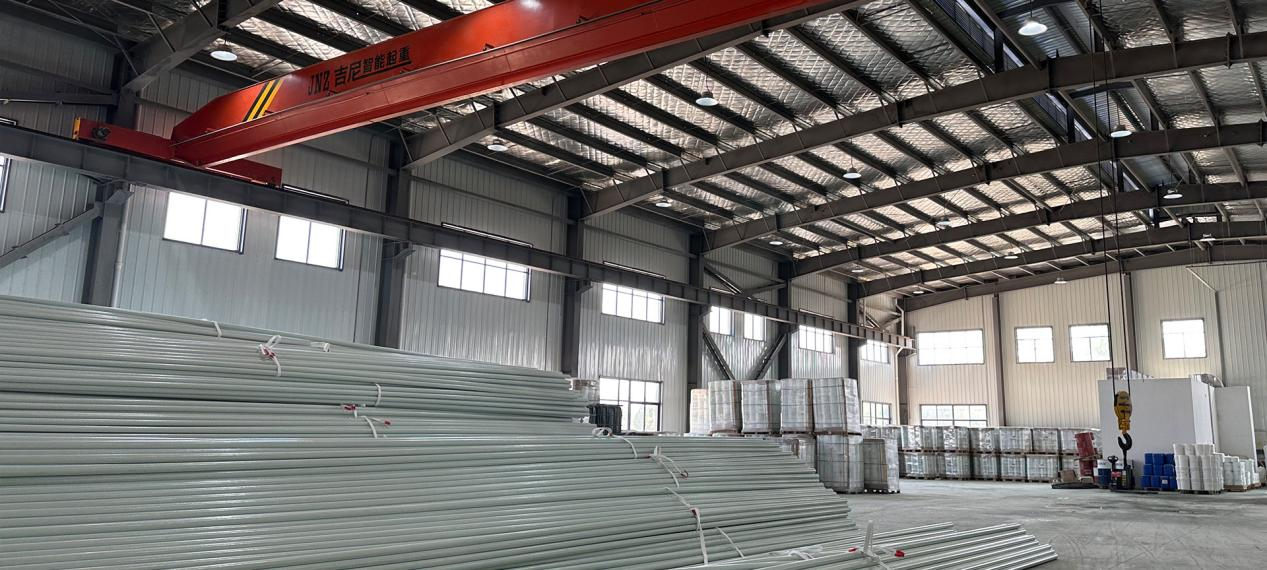
You'd be surprised how many buyers think these things are injection molded. They're not. A proper fiberglass handle is pultruded, which means the fiberglass handles you see on a hardware shelf started life as continuous glass roving pulled through a resin bath, squeezed into a die, and cured in one continuous line, like extrusion except the die is heated and the part comes out already crosslinked and hard.
The wall construction matters more than most people realize. We run a combination of continuous roving for the lengthwise strength and chopped strand mat in the outer layers to hold the hoop direction together. Cut corners on the mat and the handle will split longitudinally the first time a pry bar gets involved.
I've seen competitor samples, cheap as chips, that you could peel open like a banana with a pocket knife. That's not a handle, that's a liability with paint on it.
Resin choice is where the price fight happens. Orthophthalic polyester is the budget option and it's fine for garden use. Isophthalic or vinyl ester if the tool lives in a dairy washdown area or near fertilizer storage. We default to isophthalic for agricultural work because the cost difference per handle is cents, not dollars, and it doubles the UV and chemical resistance.
The surface finish is the last trap. A smooth gloss looks nice in a catalog and it's a nightmare in the field. You want a fine matte texture, what we call a pebble or velvet finish, because a shiny handle in wet gloves is a broken collarbone waiting to happen. Don't get me started on the catalogs showing mirror-finished handles in a muddy field. Nobody who wrote that copy has ever dug a post hole.
Shovels and spades take the worst abuse
The shovel is where fiberglass handles either earn their reputation or lose it forever. No other agricultural tool takes the same combination of prying, levering, and impact.
Here's the physics, and I promise this is the only physics paragraph. When you jam a spade under a root and pull back, the handle works as a lever, and the stress concentrates right at the socket where the head mounts.
Wood handles snap there. Cheap thin-wall fiberglass handles bend there permanently, which is worse in a way, because a bent handle looks fine from a distance and works terribly for the rest of its life.
We learned this the expensive way in 2014. A Dutch distributor ordered 8,000 D-handle spade shafts at a wall thickness we'd suggested was too thin. He wanted the lighter weight for retail shelf appeal. Fair enough. The first winter with a hard freeze, his end users started prying frozen ground, and about three percent of the handles took a permanent set. Three percent sounds small until it's 240 angry phone calls. We replaced every one of them. That's on me for taking the order instead of arguing harder, though I did argue, and I have the emails to prove it.
For spades and digging shovels, I tell buyers the same thing every time now: wall thickness for a full-size digging handle should be at least 2.5 millimeters on a 28 to 32 millimeter outer diameter, with a thicker molded end where the socket mounts. If you want lighter, shorten the handle, don't thin the wall. And the D-grip, if it's a D-handle design, should be molded in glass-reinforced nylon and pinned through the shaft, not just glued. Glued grips fail at the worst possible moment, which is always mid-throw of a shovel-load, which is always pointed at your boot.
Rakes and hoes live or die at the ferrule
Rakes and hoes are the quiet majority of agricultural tool handle volume, and they have their own failure signature. The handle itself almost never breaks. What breaks is the joint.
A hoe is a lever with a long moment arm and a head that's constantly working loose. Wood compresses under the wedge, the head wobbles, the wedge falls out in the dirt, and the tool is junk by mid-season. Fiberglass handles solve half of that problem by not compressing. E-glass in the hoop direction holds its diameter for decades, so a properly wedged head stays wedged.
But here's the thing nobody tells you: fiberglass is harder than wood, which means a standard wedge bites less aggressively. You need either a serrated steel wedge, or better, a handle with a molded collar or a pre-machined flat and a through-bolt. Most of our agricultural rake and hoe handles now go out with a bonded threaded insert at the end, so the head bolts on with a machine screw and never works loose at all. It's a small change and it ended our entire category of warranty complaints.
Rake heads are lighter than hoe heads, so fiberglass handles for rakes can run thinner, around 1.8 to 2 millimeter walls. Long-handle rakes for orchards and vineyards push 180 to 200 centimeters in length, and at that length the bending stiffness starts to matter for user fatigue, which is a fancy way of saying your shoulders notice. We've built vineyard rake handles with a slightly thicker lower third, tapered toward the grip. Costs a little more in tooling. The repeat orders paid for it in one season.
Pruners are a different animal altogether
Long-handled pruners and loppers are the segment where fiberglass handles really flex their muscles, because the loads are short, sharp, and huge. A pruning lopper cutting a 40 millimeter branch puts a spike load through the fiberglass handles that would crack hardwood over time, especially in cold weather when wood goes brittle.
And cold weather is exactly when vineyard and orchard pruning happens. January, February. Below freezing mornings. Wood handles at minus ten degrees are an accident. Fiberglass doesn't change its character at those temperatures. It doesn't go brittle. That's not marketing talk, that's decades of winter pruning cycles in Bavaria and Hokkaido and our own test bench data.
The other advantage is weight per length. A two-meter bypass lopper with fiberglass handles comes in noticeably lighter than hardwood, and after eight hours of holding it overhead in an orchard, your crew will write you thank-you letters.
A vineyard contractor in Australia told me years ago that switching to fiberglass-handled loppers cut his seasonal shoulder injury reports by half. Half! I don't have his paperwork, so treat that as a story and not a statistic, but it matches what the ergonomics people say.
One warning for pruner handles specifically: keep the wall round and let the cutting head pivot on a proper bolt. Some designers want a flattened section molded in for the pivot, and flats in a pultrusion mean the glass has to flow around the corner of the die, and that's where you get resin-rich weak spots. Rounded shaft, external blade hardware, done. I would rather lose the order than ship a handle with a molded-in flat again. 2003. A batch of lopper shafts from another supplier, not ours, but I saw the failure photos, and the flat cracked right along the resin pocket. Never again.
UV, storage, and the stuff catalogs skip
Fiberglass in direct sun chalks. The surface resin degrades before anything else, you get a whitish powder, and people mistake it for damage. It isn't structural. The handle under the chalk is as strong as the day it left the die, and a minute of rubbing takes the powder off. But if the end user sees white dust and thinks the tool is dying, you have a perception problem even if you don't have a strength problem.
That's why we UV-stabilize the outer layer on all our agricultural fiberglass handles, and why I'm annoyed that it has to be an upcharge from some factories. It shouldn't be. You're selling a tool that lives outdoors. An unstabilized handle in Arizona or Queensland will chalk within one summer, and then your brand's name is on the complaint.
Storage abuse is the other silent killer. Handles get left in the sun against a fence, get run over, get used as pry bars for fence posts.
I've watched a contractor use a fiberglass hoe handle to knock a steel fence post sideways and then act shocked when the handle was bent. Give me a break. It'll take loads wood wouldn't dream of surviving, but it is not a crowbar. We print that on the hang tags now, in three languages, because apparently it needs saying.
The good news on repairability: a wood handle that's snapped is done. A fiberglass handle that's been damaged shows it. Cracks in the gel are visible, delamination makes noise, and there is no hidden rot eating the inside while the outside looks fine. What you see is what you get. I consider that a safety feature, full stop.
What to ask your handle supplier
Most buyers ask about price per piece and delivery time, and stop there. Then they're surprised when the handles show up glossy, under-walled, and smelling like last month's resin because somebody ran the die too hot and scorched it.
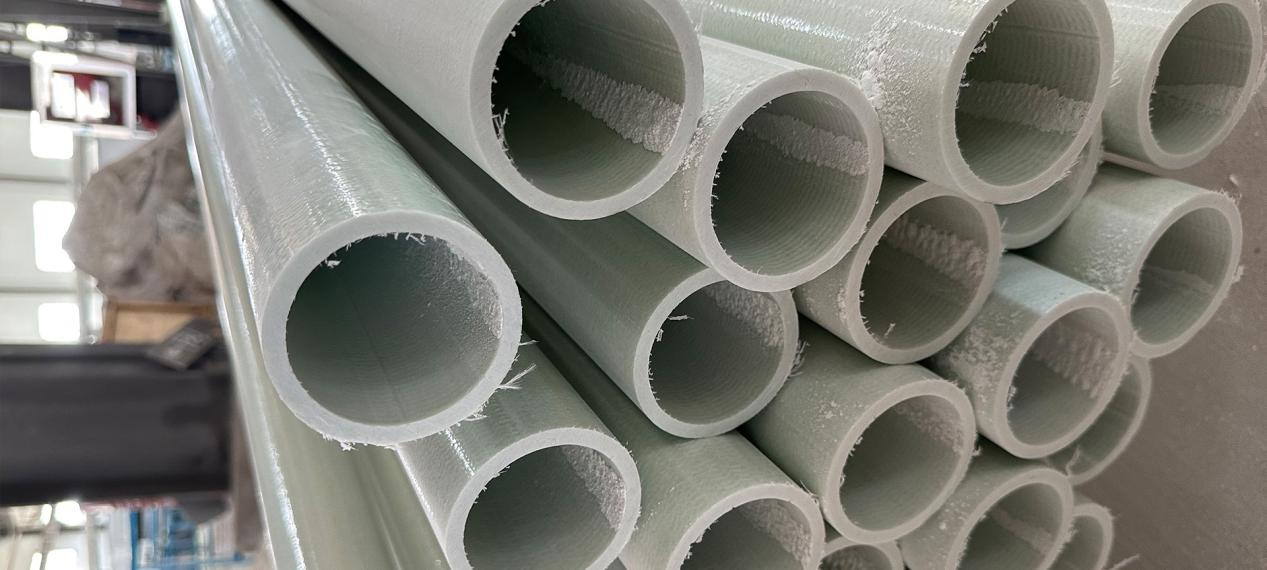
Ask about the wall thickness on your fiberglass handles and expect a number, not "standard." Ask whether the resin is ortho or iso. Ask for a sample and then abuse it: stand on it, bend it past what seems reasonable, cut the end off with a hacksaw and look at the wall for voids and dry glass. A good pultruded wall looks dense and uniform, like bakelite, not like layered cardboard. If you can see seams or pinholes, the die was worn or the glass was starved, and every one of those handles will fail early at the worst possible moment in somebody's field.
Ask about UV stabilization and get it in writing on the purchase order, because the chalking conversation will come otherwise. Ask about the socket or insert design for your specific tool head, and if the answer is "we'll figure it out after you order," that's your answer too.
We've been pultruding fiberglass handles for agricultural tools long enough to know which questions signal a serious buyer, and frankly, we take those orders more seriously than orders where only the price got discussed. The buyers who ask for wall thickness numbers are the ones whose tools come back for repeat orders year after year.
The ones who only ask about price get what they pay for, usually in about eighteen months, all at once, in the form of a warranty claim.
If you're building shovels, rakes, hoes, or pruners and you want fiberglass handles that are specified for your actual tool instead of pulled off a generic shelf, send us your head design and your expected abuse. We will tell you honestly whether our standard constructions fit or whether you need a custom die, and we'll tell you which one even if the honest answer costs us the bigger order.