 EN

Fiberglass Irrigation Stakes: The 6 mm Order I Should Have Refused
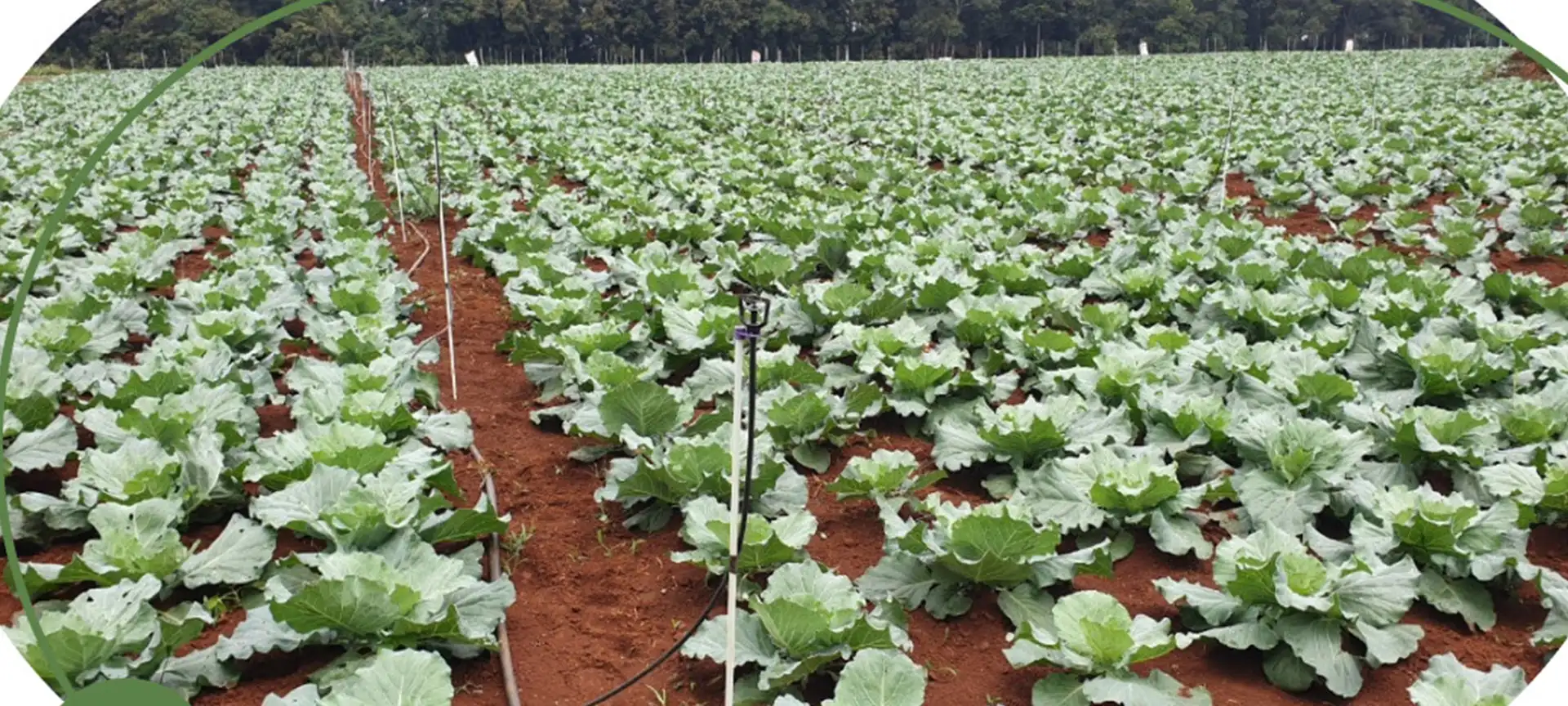
He sent a photo of his cabbage field on a Tuesday, red dirt and a white stick in every row with a spinner on top, and underneath it one line: why are they leaning? So I asked him what diameter he'd gone with. Six. Give me a break.
I've been pulling rod since 1989, back when the line was mostly mat and woven roving and nobody in the office could spell pultrusion, and I still get that particular phone call, the one where a grower has saved a few cents a stick and wants to know why his water is landing in the path. You know before you ask. You always know.
He'd gone round us to a trading company. Eight cents, maybe less. I never saw the invoice, and he was quite pleased with himself for about a week, which is fair enough, I'd have been pleased too if I hadn't watched it go sideways six times before. Then the heads started nodding and somebody on the crew took the picture.
His second message asked whether these were the fiberglass irrigation stakes we'd shipped him the previous spring. No, they weren't. I still have that email and I don't know why I keep it, evidence I suppose, as if anybody's going to hold an inquiry into a cabbage field.
For anyone who hasn't spent a morning up to their ankles in red mud, the thing in that photo is a solid pultruded rod, eight to ten mil, eight hundred to a thousand long, sharpened at one end and shoved into the ground, with a black PE micro tube running up the side and a purple clip holding a little rotating head above the leaves. The soil probe sorts out when to water. The rod just keeps the head up there, and a more boring job you couldn't invent.
Nobody out there has ever asked me if it conducts. It doesn't. End of.
I told him no when he first floated six mil. He bought it somewhere else anyway. Bit of a result, that.
Rust, and the rest of it
Galvanised tube goes right at the soil line, always does, wet red earth and fertiliser and air all having a go at the same ten centimetres, and I drove out to a leafy greens block, must've been 2016, after they'd pulled most of their risers out and stacked them by the shed like firewood. Two thousand went in. More than half came out again; I can't remember the figure and I'm not going to ring anybody on a Friday to find out. The labour bill was worse than the tube, and the poor bloke showing me round had been copping it from his boss all week.
I pulled one up and the top half came away in my hand. Just like that.
What actually costs you the money isn't the broken stake, it's the rusty water tracking down the rod onto the cabbage hearts, brown streaks on the inner leaves, and the packhouse rejecting a whole bed that grew perfectly well, which he'd been blaming on his wash line for two seasons. I held the rod up, let the water run off it onto my boot, and the penny dropped. He went very quiet.
Cheap as chips, that's what he said the tube had been, and I didn't have the heart to tell him what the replacements came to. I don't quote fiberglass irrigation stakes against galvanised tube on price any more, because there isn't a comparison to have.
I brought that broken half home in the car. I think it's still in the boot, under a coil of old drip tape.
Six mil
Look, bending stiffness goes with the fourth power of diameter. Ten mil is roughly two and a half times stiffer than eight, eight is close to three times stiffer than six, and if you don't believe the arithmetic just lay a metre of each on a bench, hold one end and push the other with your thumb, it takes about four seconds. E-glass is around 72 GPa; a decent unidirectional pultruded rod with a sensible fiber fraction lands nearer forty to fifty axially; steel's 200 and steel's the one that stays bent, because it yields, whereas glass, within reason, springs back, which is the bit nobody puts on a data sheet because it's awkward to put a number on "springs back".
That's usually where the argument ends.
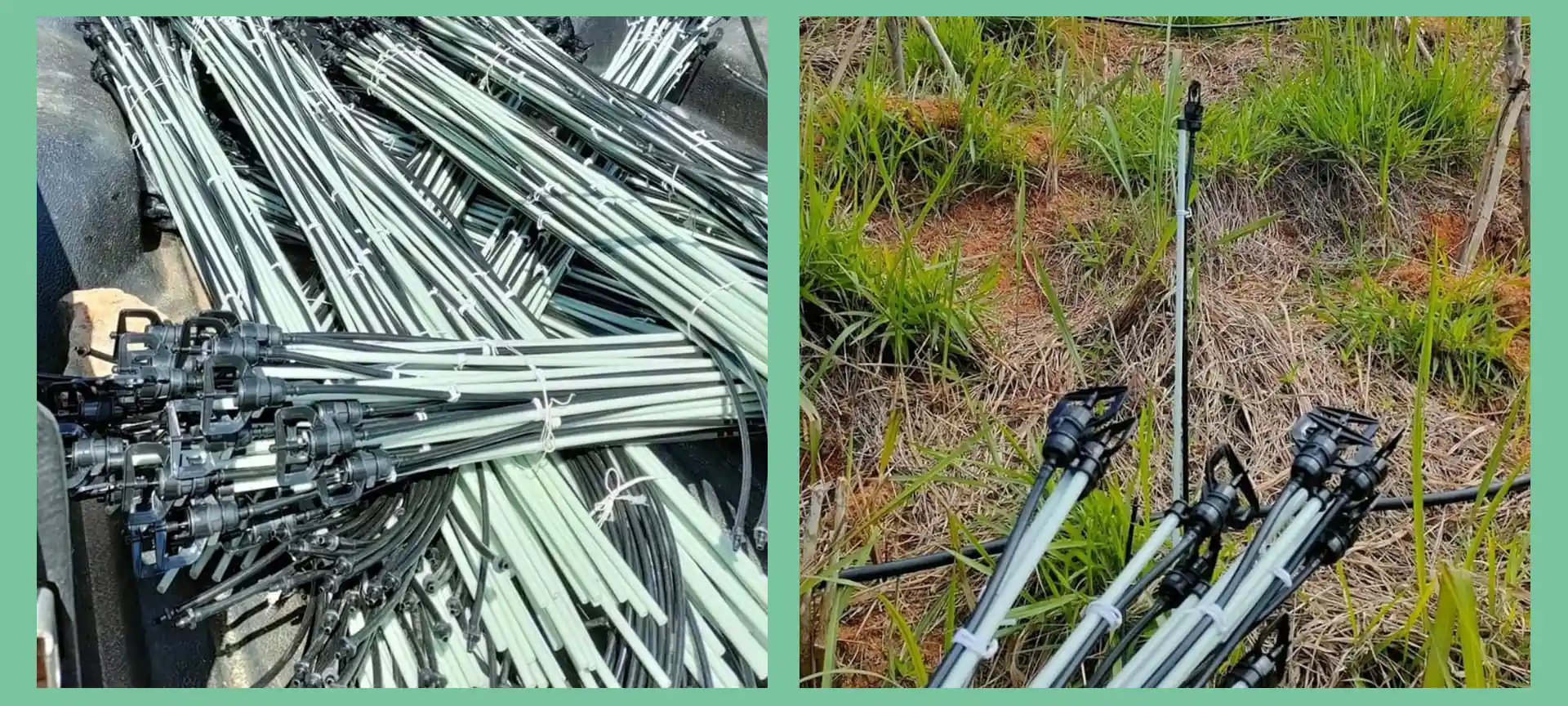
I walked a block once after the harvest crew had been through, some time around 2020, and counted the steel risers folded over at the base, eleven or nine or something, I wrote it on the back of a delivery note and then left the note in a hotel, and the glass rods in the same rows had been flattened by a boot and were standing up again by the time I got there with nobody having touched them. He replaced the steel. That was it.
A spinning head pushes back as well, thirty to a hundred and twenty litres an hour depending on the nozzle, small torque, but it doesn't stop, and on a six mil rod a metre tall small is plenty, the assembly nods a few degrees over a fortnight and because nobody's stood there watching the damn thing nobody notices until half the bed's soaked and the other half's dust. One grower rang me about his nozzles. Sent me a spreadsheet, fourteen columns, not one of them the diameter of the stake. He'd never measured the fiberglass irrigation stakes he was blaming. I posted four ten mil samples, told him to swap one row, and he rang back the following week. It was the rod. It's usually the rod.
We had a die once, early days, that wandered between 7.9 and 8.3 over a single pull, and old Wang, who'd been on that line since before I had a company car, kept a caliper in his shirt pocket and swore at it every twenty minutes, "again", he'd say, and shove it under my nose, as if I'd done it personally. The clips were moulded for 8.0. You can guess the rest. These days we hold plus or minus 0.1 mm, and that's the only figure on our sheet a clip designer ever looks at, the rest of it being for the poor soul in purchasing who has to tick boxes.
People ask for a metre because a metre sounds like more. I'd rather send 900 mm of ten mil and have the head stay where they pointed it, but saying that out loud on a call has never once worked, so now I send samples and keep my mouth shut. Fiberglass irrigation stakes get bought by the metre, and that's half the trouble.
Bamboo, PP, and other bright ideas
A co-op tried bamboo before they tried us, four hectares I think, and the diameters in one bundle ran from seven to eleven mil while the purple clips were eight, which is a right mess before you've even put it in the ground. By midsummer a couple of hundred heads had slipped and were watering the path. Bamboo swells when it's wet, splits along the grain when it dries out, and grows mould down where you can't see it, so a clip that fitted in April is hanging off in July. Don't get me started on the mould.
PP rod goes the other way, sun at thirty eight and a whole row leans over by lunchtime; I stood in one of those rows watching the heads still running, cheerfully throwing water at bare dirt, and the grower telling me they were "fine, mostly", which is grower for "I haven't walked down there in three weeks". A stake that fails slowly is the expensive kind. By the time somebody sees it the crop's already taken the hit.
For a while buyers kept asking whether fiberglass irrigation stakes would split the same way. They don't. We didn't invent a stick in the ground, we just made one that stays the same size, and there's no clever bit to it.
The topcoat I should never have skipped
Glass doesn't mind sun. Resin does, and bare polyester chalks, then you get fiber bloom, which is a polite way of saying the rod grows hair and leaves splinters in a picker's palm, gloves or no gloves; the crew complains to the grower, the grower complains to the trader, and about three months later, via a chain of forwarded emails with everyone's signature on them, it lands on my desk.
We ran two formulations through QUV-B for a thousand hours in 2016, one lost four percent gloss, the other forty one, same roving, same die, same Tuesday for all I remember, and the only difference was a topcoat worth a few cents.
Then in 2019 a buyer talked me out of the polyurethane on a six hundred rod order. He had a target price, it was a Friday, the office had gone home, and I said yes because I wanted to get off the phone. Stupid. Two seasons later his lot said the rods were shedding; I went out, ran a thumb along one, came back with white dust on my skin. The fiberglass irrigation stakes in that order had no topcoat, that was the whole of it, and we replaced every last one at our cost. I haven't skipped one since, whatever the target is, and if that makes me awkward to deal with, tough.
Black. Everyone wants black because black looks like equipment, black gets hot enough that you don't want to grab it at noon, and black usually means carbon black, a conductive filler, which is a daft thing to put in a rod whose entire career consists of holding a sprinkler up. White, light grey, and you can spot a broken one from the far end of the field. I had a distributor once who kept calling it "a premium finish". It was pigment. I said so and he went quiet, same as the rust bloke.
There are fiberglass irrigation stakes from a 2011 order still standing in a nursery block. Chalky as anything. Still holding the clip.
February, up north
Cut ends are a bundle of capillaries, water climbs the glass and the interface, freezes, and opens the end up, and we shipped a northern order without sealing them once, 2017 I want to say, though the complaint email said forty one came back split and I've long since stopped trusting numbers in complaint emails, so call it forty. Top twenty mil, split like a broom. The buyer reckoned we'd used recycled glass. Good glass, ten seconds of work we hadn't done. That's on me.
Both ends get resin or a heat shrink cap now, the buried one sits in wet fertilised soil all winter and the top one under a wet clip all summer; the fiberglass irrigation stakes we send north are capped before they're bundled and it's on the packing list, because otherwise some lad in the yard decides it's not worth the bother and he's not wrong, it isn't, until February.
Vinyl ester earns its keep down there. A buyer asked me once what resin went into our fiberglass irrigation stakes and I nearly fell off the chair, because in nine years he was the first. Orthophthalic hydrolyses, goes brittle, loses interlaminar shear, and I'm not putting general purpose polyester under a sprinkler line, which I've said often enough that our own sales lot roll their eyes when I start on it. Isophthalic's fine on a dry site. Don't ask me to quote the general purpose stuff for a wet one.
The bottom gets a point, thirty to forty five degrees, ground flat, no burr; too blunt and you need a hammer, and the hammer splits the top where the clip sits, too sharp and somebody drops one and punctures the drip tape, which we found out on our first rod run in 1998 when we sharpened the things like pencils and a roll of tape went on day one. It wasn't on the drawing. That's how it happened, and it's on the drawing now.
The magnet in the glove box
An eight by a thousand rod's about a hundred grams, the steel version four times that, and one man'll carry three hundred of ours down a row without thinking about it, which is an hour against a morning and shows up on the labour line even when our price looks worse, though good luck getting that past a purchasing department with one column in its spreadsheet.
A buyer sent me a competitor's sample in 2008, asked me to match it, and it felt wrong in the hand before I'd even got it out of the bubble wrap. Went to the car, got the magnet I keep for checking steel cores, stuck it on. Thin steel, glass wrap, PE skin. He'd already paid a deposit on five thousand. He got it back because he'd left the sample on his desk instead of binning it, and I've told that story so many times I'm sick of the sound of my own voice, but it's still the quickest test going.
Weigh the first pallet. Weigh the third as well.
I've had buyers tell me fiberglass irrigation stakes are all the same once they're in the ground, and I used to argue with them about stiffness and deflection until it dawned on me that nobody's changed their mind on a phone call since about 1994, so now I send four samples and shut up.
A cut face tells you more than a datasheet, uniform fiber, no voids, and if there's a chalky white core in the middle, walk away; burn an offcut, glass doesn't drip, and I've done that in a car park with a lighter while two blokes argued over a certificate, and funny how fast the argument stopped.
What gets me is the trading. Three mills in a month, whichever is cheapest that week, cut to length in a yard that keeps no die settings, clips slipping by August, and a test report describing a rod that hasn't existed since February. Fiberglass irrigation stakes off a line that stays put are worth more than a cheaper pallet off one that doesn't, and I've had that conversation with people who then ask for another half cent.
Bend test too. Support both ends, five kilos in the middle, take it off, measure what's left. A good rod's straight again. I don't have a standard for the number, I just look at it, and if somebody wants it written down in a box on a form, they can have my caliper and do it themselves.
Send me the head model
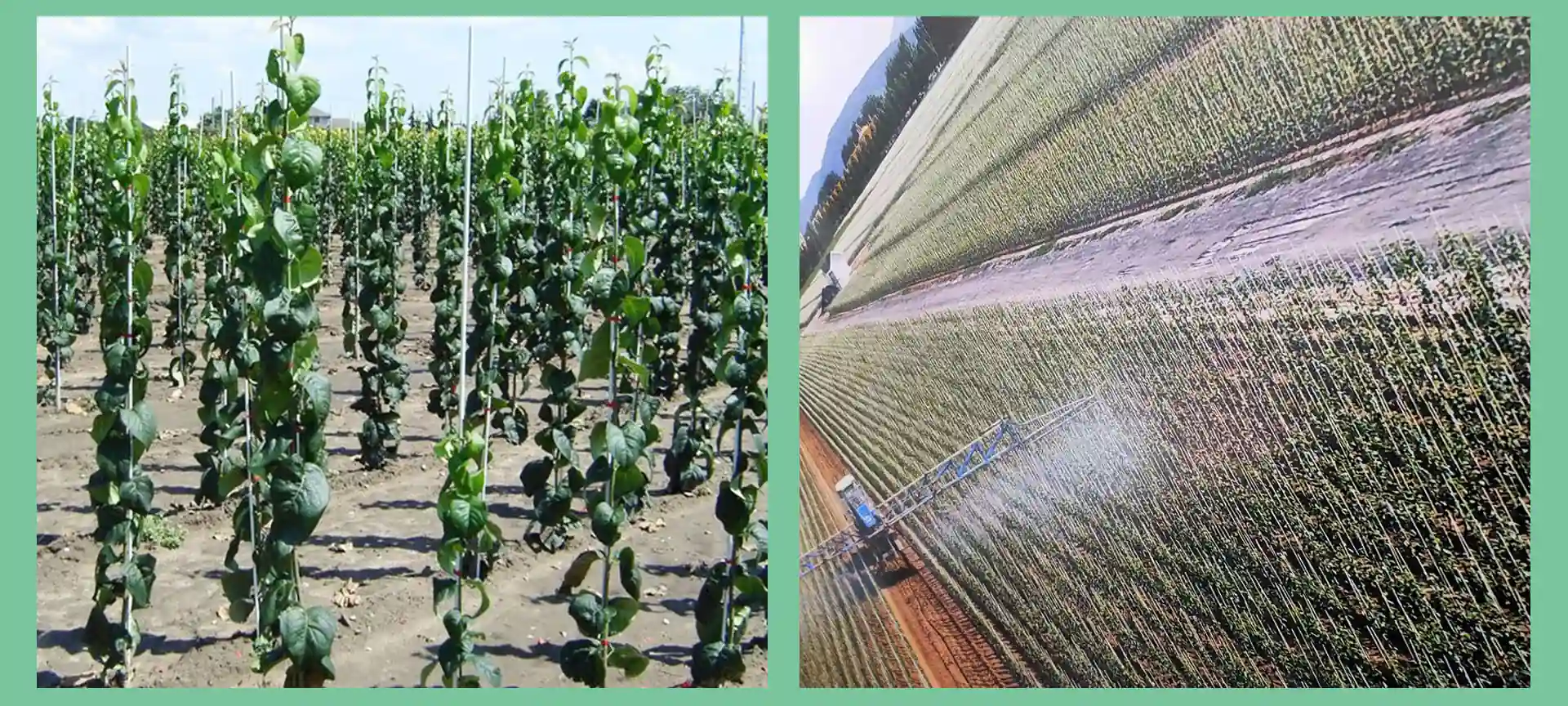
The photo bloke swapped to ten mil in the end, sent another picture in the autumn with no message under it, which I took as a result.
If you're putting spinners over vegetables or nursery stock, tell me how high the crop gets and which head you're running, flow rate too, and what the ground's like, because a point that goes into red dirt isn't going into rock, and I'll come back with eight or ten mil, a point angle and an end treatment, usually the same afternoon unless I'm out at a factory and the signal's packed up. If you're hanging a heavy impact sprinkler, buy steel. I've said that to people and lost the order. No skin off my nose.
The FRP profiles page has the diameters and lengths we actually pull. Our fiberglass irrigation stakes go out capped and coated, and if you want them black I'll ask you twice why, then I'll probably say no a third time.