EN
EN
High-Performance Carbon Fiber Rods: What Engineers and Manufacturers Need to Know
1. Introduction: Why We’re Swapping Steel for Carbon
Let’s be real: in the engineering world, weight is the enemy. Whether you’re building a racing drone that needs to snap around corners or a robotic arm that works 24/7, every extra gram is just a drag on performance. That’s exactly why Carbon Fiber Rods have gone from "space-age luxury" to a day-to-day essential.
Steel is great, sure, but it’s heavy and it rusts. Aluminum? It’s light, but it bends under pressure. Carbon fiber is that "sweet spot"—it’s got the backbone of steel at a fraction of the weight, and it won't corrode even if you soak it in salt water.
A Quick Reality Check
I’ve been in the trenches of the composites industry for over 7 years now. When we started pushing our exports globally at CQDJ back in 2022, I saw a lot of "old school" engineers hesitate to make the switch. But after helping clients in 30+ countries—from Moscow to Warsaw—swap out their heavy metal frames for carbon, the results speak for themselves.
I’m not just talking about high-level theory here. I’m talking about the "grit" of manufacturing—knowing exactly how a pultruded rod will behave under a specific load or why a certain resin mix might fail you in the heat.
In this guide, I’m cutting through the marketing fluff. I'll show you what actually matters when picking a rod, so you don't end up overpaying for specs you don’t need, or worse, buying a rod that snaps on the job. Let’s dive in.
2. What Exactly is a Carbon Fiber Rod? (No Fluff Version)
Think of a carbon fiber rod like "frozen" strength. It’s essentially thousands of high-tech carbon filaments glued together with a resin matrix to create a carbon composite rod. But here’s the kicker: how you bake it matters just as much as what’s inside.
Depending on the manufacturing "recipe," you end up with two very different animals, whether you’re looking for solid carbon fiber rods or a carbon fiber rod tube.
2.1 The Two Heavy Hitters: Pultruded vs. Roll-Wrapped
If you’re looking to buy carbon fiber rods for a project, you need to know which one to pick, or you're just throwing money away.
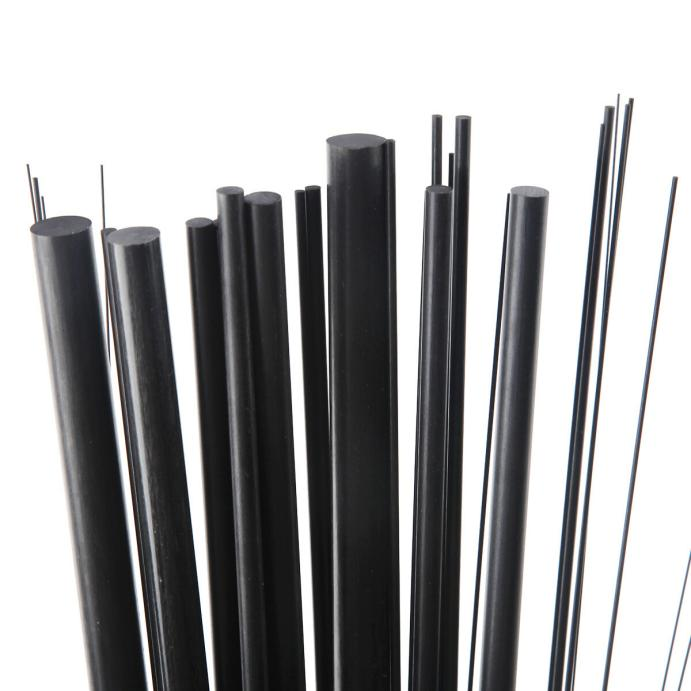
●Pultruded Carbon Fiber Rod (The Workhorse): This is the "classic" way. We pull fibers through a heated die like making spaghetti to create a pultruded carbon rod. The fibers all run in one direction—straight down the length.
●The Vibe: It’s incredibly stiff if you’re trying to pull it or push it lengthwise. This is why carbon fiber reinforcement rods are almost always pultruded.
●The Catch: A pultruded carbon fiber rod is prone to "splintering" if you try to twist it or drill into it without being careful. It’s the go-to for carbon fiber kite rods or structural stiffeners.
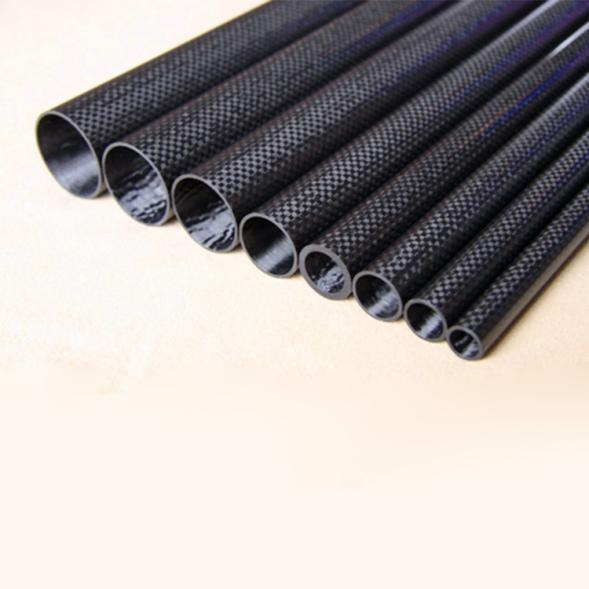
●Roll-Wrapping (The All-Rounder): Imagine wrapping a cigar. We take sheets of carbon fiber and wrap them around a mandrel. This is how we get a high-quality hollow carbon fiber rod or carbon fiber rod tube.
●The Vibe: Because the fibers are crisscrossed, this cfrp rod can handle "torture" from all sides. It won't snap if you twist it.
●The Catch: It’s more expensive than basic carbon fiber sticks. But if you're building a drone arm or high-end carbon fiber rods for rc planes, you’d be crazy not to use this. It’s got that "hoop strength" that keeps the tube from crushing.
2.2 Let’s Talk Numbers: The "Cheat Sheet" for Carbon Fiber Sticks
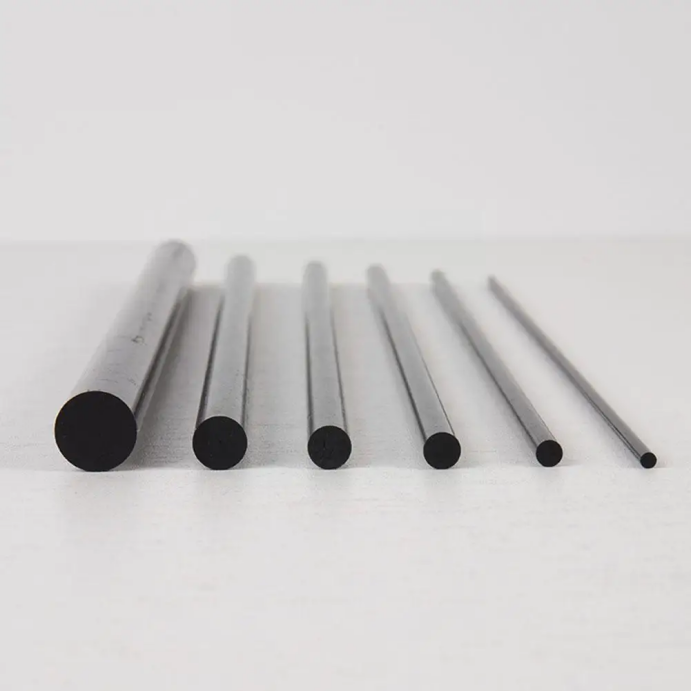
I hate long-winded data sheets. Here’s the "Cliff Notes" version of why people are searching for carbon fiber rods for sale to replace the heavy metal stuff. Whether you need a tiny 1 mm carbon rod or a heavy-duty carbon fibre rod 20mm, the physics don't lie.
| Property | Unit | Standard Modulus (SM) | High Modulus (HM) | Comparison to Steel |
| Tensile Strength | MPa | 2,500 - 3,500 | 3,000 - 4,500 | ~5x Stronger |
| Tensile Modulus | GPa | 130 - 150 | 230 - 390 | ~1.5x - 2x Stiffer |
| Density | g/cm³ | 1.5 - 1.6 | 1.6 - 1.8 | ~1/5 the Weight |
| Resin Content | % | 30% - 35% | 25% - 30% | - |
| Service Temp | °C | -50 to 120 | -50 to 150 | Depends on Resin |
2.3 Shnnen’s Reality Check: Size Matters (From 1mm to 20mm)
In my 7 years in the game, I’ve seen so many guys try to save a buck by using a 3mm carbon fiber rod where they clearly needed an 8mm carbon fiber rod.
Look, carbon fiber sticks are always light, but "thin" doesn't always mean "flexible carbon fiber rods." If your machine needs to be dead-accurate—no sagging, no vibration—you have to scale up. We stock everything from the hair-thin 1.5 mm carbon fiber rod to the beefy 12mm carbon fiber rod.
If you're searching for "carbon fiber rods near me" because you're in a rush for a 6mm carbon fiber rod or a specific 1 4 carbon fiber rod, remember that CQDJ ships globally. We've sent everything from 4mm carbon fiber rod bundles to 10mm carbon fiber rod orders to over 30 countries faster than most local suppliers can even pull a quote.
3. Key Types of Carbon Fiber Rods: Finding the Perfect Match
Not every project requires the same structural profile. At CQDJ, we categorize our carbon fiber rods into three main dimensions to ensure the mechanical performance aligns with your engineering needs.
3.1 Classification by Geometry (Shape)
The shape of the rod determines its resistance to bending and how it integrates into a larger assembly.
●Round Rods: The most common profile, offering uniform strength and ease of attachment using standard collars or connectors. Ideal for tent poles and camera rigs.
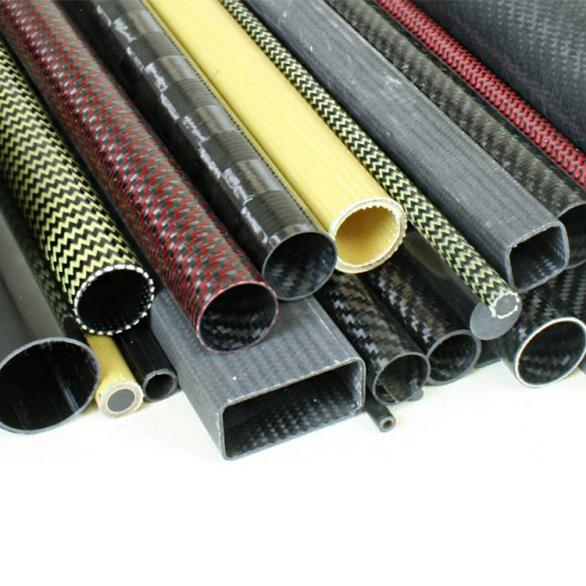
●Fiberglass Square & Rectangular Rods: These provide flat surfaces for easy mounting and superior resistance to bending in a specific direction. Often used in robotics and structural frames.
●Telescopic Rods: A specialized multi-segment design that allows for adjustable length. These are indispensable for cleaning poles, rescue tools, and antenna supports.
3.2 Classification by Surface Finish
Surface treatment is not just about aesthetics; it affects UV resistance, grip, and secondary bonding.
●Smooth (As-Pultruded): The standard finish directly from the die. It is cost-effective and functional for internal structural use.
●Glossy & Matte: These are achieved through additional coating or sanding. Glossy finishes are popular in high-end consumer goods, while Matte provides a professional, low-reflection industrial look.
●Peel Ply Finish: This creates a deliberate rough texture. As a specialist, I highly recommend Peel Ply if you plan to bond the rod using adhesives, as it significantly increases the surface area for a much stronger chemical bond.
3.3 Classification by Fiber Orientation & Wrap
The way fibers are laid out determines the rod’s behavior under "torture" (stress).
| Type | Fiber Layout | Mechanical Strength | Best Use Case |
| Unidirectional (UD) | All fibers run 0° (lengthwise). | Highest longitudinal tensile strength; lightest weight. | Support beams, tension members. |
| Fabric-Wrapped (3K) | 0° core with a 2x2 or 1x1 weave outer layer. | Excellent torsional strength (twisting) and prevents splitting. | Drone arms, sports shafts, decorative parts. |
3.4 Shnnen’s Pro-Tip: The "Splitting" Factor
In my 7 years of manufacturing experience, I’ve seen many clients choose Unidirectional (UD) rods for their high strength, only to have them split when a screw is drilled through them.
If your application involves mechanical fastening or high impact, I always advise choosing a 3K Fabric-Wrapped finish. The woven layer acts like a "sleeve" that holds the internal fibers together, preventing longitudinal cracking under stress.
4. Industry Applications: Where Performance Meets Reality
Carbon fiber rods are no longer a "luxury" material; they are problem-solvers across diverse sectors. Drawing from our experience exporting to 30+ countries, here is how our clients are utilizing these high-performance profiles.
4.1 Aerospace & UAVs (Unmanned Aerial Vehicles)
In the drone industry, every gram counts. Carbon fiber rods are the gold standard for structural integrity without the weight penalty of titanium or aluminum.
●Frame Stiffeners: Providing rigid support for multi-rotor and fixed-wing aircraft.
●Landing Gears & Support Arms: Absorbing impact while maintaining a high strength-to-weight ratio.
●Tail Booms: Ensuring precision and reducing vibration in RC helicopters and professional UAVs.
4.2 Industrial Automation & Robotics
Modern factories require speed and precision. The low inertia of carbon fiber makes it ideal for high-speed moving parts.
●End-Effectors: Lightweight "fingers" for robotic arms that allow for faster pick-and-place cycles.
●High-Speed Connecting Rods: Reducing the mechanical load on motors, thereby extending the lifespan of the automation system.
●Metrology Equipment: Used in 3D scanning frames due to carbon fiber's near-zero thermal expansion, ensuring measurements stay accurate in varying temperatures.
4.3 Sports & Outdoor Equipment
For the consumer market, durability and "feel" are paramount. Our rods provide the perfect balance of flexibility and toughness.
●Telescopic Tent Poles: Replacing heavy fiberglass or easily-bent aluminum for high-end camping gear.
●Kite & Windsurf Skeletons: Maintaining aerodynamic shapes under high wind pressure.
●Fishing Rod Blanks: Leveraging the high modulus of carbon fiber for extreme sensitivity and casting power.
4.4 Construction & Structural Reinforcement
This is a growing field where carbon fiber’s corrosion resistance outperforms traditional steel rebar.
●Concrete Reinforcement: Strengthening bridges and columns without increasing the structure's footprint.
●Historical Restoration: Repairing old masonry and timber beams. Because carbon fiber rods are thin yet incredibly strong, they can be inserted into structures to provide "invisible" reinforcement while preserving the original aesthetics.
5. Selection Guide: How to Choose the Right Rod (Selection Tips)
After 7 years in the industry, I’ve noticed that most procurement errors happen because the buyer focuses only on price, not performance. Here are my top selection tips:
1.Define the Load Type: Will the rod face bending (Flexural), pulling (Tensile), or twisting (Torsional)?
Tip: Use Pultruded for pulling; Roll-wrapped for twisting.
2.Consider the Environment: Will it be exposed to salt water or harsh chemicals?
Tip: Carbon fiber is naturally resistant, but the Resin type (Epoxy vs. Vinyl Ester) must be chosen carefully for chemical compatibility.
3.The "Safety Margin" Rule: Always choose a rod with a tensile strength at least 20% higher than your maximum calculated load to account for dynamic stresses.
5. Selection Guide: How to Choose the Right Carbon Fiber Rod
Choosing the wrong rod can lead to structural failure or unnecessary costs. As someone who has managed supply chains for over 30 countries, I recommend evaluating your choice based on these three critical reliability pillars.
5.1 Determining Load Requirements & Stiffness
Stiffness (Modulus) is often more important than breaking strength. To ensure your project succeeds, you must calculate the Deflection (bending) the rod will undergo.
●The Stiffness Formula: For a cantilever beam, the deflection ($\delta$) is calculated as:
(Where F is load, L is length, E is Young’s Modulus, and I is the Area Moment of Inertia).
●Pro Tip: If your application requires "zero-flex" (like a camera rail or precision sensor arm), you must opt for High Modulus (HM) fibers. While standard rods are strong, HM rods provide the extra rigidity needed to prevent vibration and sagging.
5.2 Environmental Durability: Chemicals & Temperature
While carbon fiber filaments are nearly inert, the resin matrix is the deciding factor in harsh environments.
●Corrosion Resistance: For marine or chemical processing applications, we use specialized Vinyl Ester resins that offer superior resistance to acids and alkalis compared to standard epoxy.
●Thermal Stability: Standard epoxy rods perform well up to 80°C - 100°C. If your project involves high-temperature industrial exhaust or aerospace components, we can utilize High-Tg (Glass Transition Temperature) resins that maintain structural integrity up to 180°C.
●UV Protection: For long-term outdoor use (like construction or antenna poles), ensure the rods have a UV-resistant coating to prevent the resin from "yellowing" or degrading over time.
5.3 Technical Advice: How to Cut and Finish Without Delamination
One of the most common questions I receive at CQDJ is: "How do I cut these without the ends splintering?" Proper handling is key to maintaining the rod's reliability.
1.Cutting Tools: Never use a standard wood saw. Use a diamond-coated abrasive blade or a fine-tooth hacksaw. High-speed Dremel tools with diamond cutoff wheels work best for small diameters.
2.Preventing Splitting: Wrap the cutting area tightly with masking tape before sawing. This supports the outer fibers and prevents them from "peeling" or delaminating.
3.Safety First (Crucial): Carbon fiber dust is conductive and can irritate skin and lungs.
Always wear a P2/N95 respirator and safety goggles.
Wear gloves to avoid "invisible" carbon splinters.
Vacuum the dust immediately to prevent it from short-circuiting nearby electronics.
6. Quality Control:Why Our Rods Don't Just "Look" Good
In the composites world, a carbon fiber rod can look perfect on the outside but be a total disaster on the inside. If the resin didn't cure right or the fibers are wavy, that rod is going to fail when the pressure is on.
After 7 years in the industry and moving tons of carbon fiber rods and tubes to 30+ countries, I’ve learned one thing: Trust is built in the lab, not the showroom. At CQDJ, we don't just ship and pray. We test.
6.1 The "No-Nonsense" Inspection Process
Whether you’re buying a tiny 1 mm carbon rod for a hobby project or a heavy-duty carbon fibre rod 20mm for an industrial crane, our QC team treats them with the same obsession.
Micrometer Precision: We don’t do "close enough." When you order an 8mm carbon fiber rod or a 10mm carbon fiber rod, we use digital laser gauges to make sure the tolerance is tight. If you need a 1/2 inch carbon fiber rod to fit perfectly into a metal sleeve, it’s going to fit—no rattling, no sanding required.
The Straightness Test: A bent rod is a nightmare for carbon fiber rods for rc planes or CNC parts. We roll our solid carbon fiber rods on precision granite tables. If it wobbles, it’s scrap. Simple as that.
Burn-off Analysis: This is where we get nerdy. We take a sample of our pultruded carbon fiber rod and literally burn away the resin to check the fiber volume. If it’s not the perfect 65-70% fiber-to-resin ratio, the batch doesn't leave the factory. That’s how we guarantee our cfrp rod performance.
6.2 Compliance: No Red Tape Headaches
If you’re looking to buy carbon fiber rods for the European or US markets, you know that "paperwork" is just as important as the product.
REACH & RoHS: Our carbon composite rods aren't just strong; they’re clean. We make sure our resin systems are free of the nasty stuff, so you don't run into legal snags.
Global Ready: Because I’ve been helping clients buy carbon fiber rods globally since our "0 to 1" start in 2022, I know exactly what certifications your customs office is going to ask for. Whether it's a bundle of 5mm carbon fiber rod or a specialized carbon fiber threaded rod, we provide the docs to get it through.
6.3 Shnnen’s Final Word on Quality
I’ve seen plenty of cheap carbon fiber sticks online. They look great in photos, but when you actually put a 3 8 carbon fiber rod from a discount supplier under load, it delaminates.
At CQDJ, we aren’t the cheapest "near me" option you’ll find on a random search for carbon fiber rods near me. We are the guys you call when you need a carbon fiber round bar or carbon fiber rectangular rod that actually does what the data sheet says. We don't cut corners, because in this business, a cut corner is a broken rod.
7.FAQ: Everything You Need to Know About Carbon Fiber Rods
I have spent a lot of time talking to engineers and buyers. After we discuss the price of a carbon fiber rod people usually ask these questions.
Q: Can I get carbon fiber rods in sizes like a 1/4 inch carbon fiber rod or a 1/2 inch carbon fiber rod?
A: Yes you can. We use the system in our factory but we also understand the imperial system for our clients in the US and the UK. We can make a 1/4 inch carbon fiber rod, a 1/2 inch carbon fiber rod or a 5/16 inch carbon fiber rod because we have the right tools.
Q: Is a carbon fiber rod better than a hollow carbon fiber rod?
A: It depends on what you need. If you are using carbon fiber rods for reinforcement you should use a solid carbon fiber rod.. If you are making something that needs to be very light and strong like carbon fiber rods for remote control planes a hollow carbon fiber rod is a better choice.
Q: I need a thin carbon fiber rod. How small can you make them?
A: We can make small carbon fiber rods. We have a 1 mm carbon fiber rod, a 1.5 mm carbon fiber rod and a 2 mm carbon fiber rod that are very strong for their size. For projects our 2.5 mm carbon fiber rod, 3 mm carbon fiber rod and 4 mm carbon fiber rod are very popular.
Q: What about sizes for special projects?
A: We can help you with that. We make carbon fiber rods in sizes from a 5 mm carbon fiber rod and a 6 mm carbon fiber rod for kites to a 12 mm carbon fiber rod for heavy-duty industrial frames. We also make a 3/16 inch carbon fiber rod, a 3/8 inch carbon fiber rod and a 1/8 inch carbon fiber rod for engineering needs.In addition, we also produce glass fiber rods.
8. Wrapping It Up: Let’s Build Something Stronger
Choosing a carbon fiber rod should not be difficult. Whether you are buying carbon fiber rods for the time or you are an experienced engineer looking for a reliable supplier you want the best performance.
Since I started working at CQDJ in 2022 I have wanted to show that products made in China can be of high quality. We have shipped carbon fiber rods to countries and we are just getting started.
If you are still looking for carbon fiber rods near you. Trying to decide between a carbon fiber round bar and a flexible carbon fiber rod stop searching.You can send me a message today. If you need a quote, for a carbon fiber rod or just want to talk about carbon fiber rods I am here to help you get the materials quickly.