 EN
EN

Fiberglass Stakes: What They're Made Of, Whether They Work for Plants, and How to Cut Them
What Are Fiberglass Stakes Made Of?
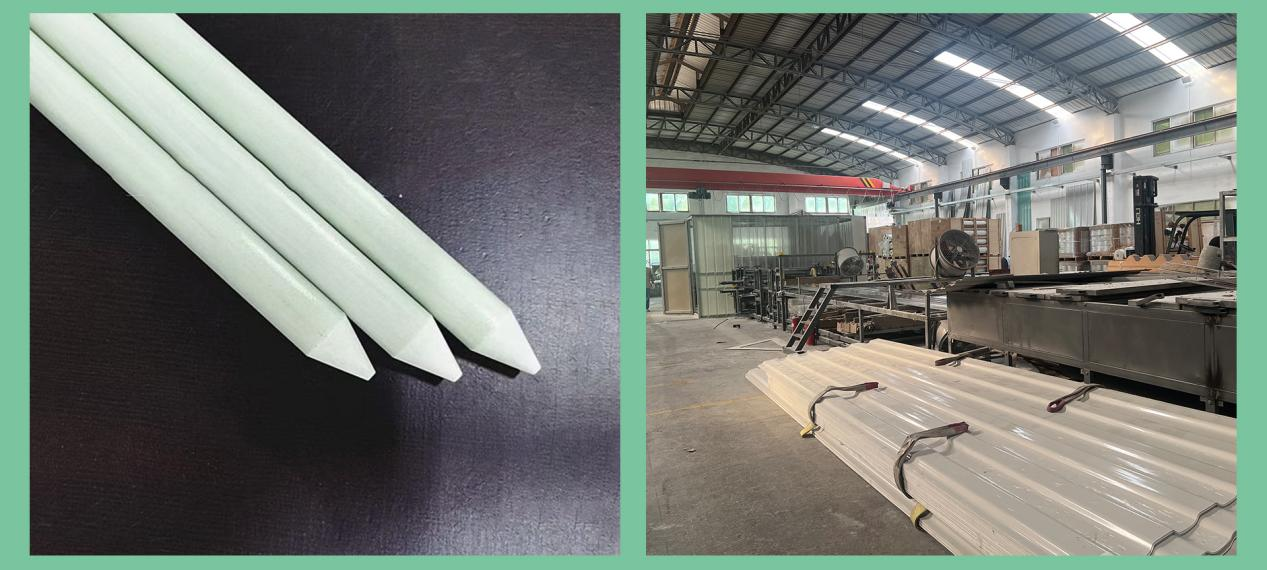
A fiberglass stake is a pultruded rod. That's it. Glass roving pulled through a heated die, saturated with resin, cured in one pass. What comes out the other end is a solid round rod with fiber running the whole length. I've been watching that process since 1989. It doesn't change much. It doesn't need to.
The glass is E-glass. The resin is usually polyester, sometimes vinyl ester when the job gets rough. The resin system is what separates a stake that lasts from one that turns to chalk.
Cheap stakes run ortho polyester. They work fine indoors and out for a season or two. But if a stake is going to sit in wet ground for years, or take full sun every afternoon, ask for isophthalic polyester or vinyl ester. The price climbs maybe ten percent. The service life doubles. I've pulled ortho stakes out of the ground after three seasons that were soft and chalky on the outside. Same spec in isophthalic, five seasons in, still solid.
The surface tells you something too. Most fiberglass stakes come out of the die with a smooth finish. Some makers sand them or spiral-wrap a surface veil so coatings grab hold. For stakes you want smooth. Smooth sheds dirt, resists splitting, and won't chew up your gloves when you're driving them in.
Don't confuse a fiberglass stake with a fiberglass rod meant for another job. Same family, different part. A rod can be round, square, solid, hollow, whatever the die says. A stake is a rod cut to length with one end pointed. When you buy an 8 ft fiberglass rod, you're buying raw material. When you buy a stake, you're buying the finished part.

Are Fiberglass Stakes Good for Plants?
Yes. And I'll give you the reason in one word. Rot.
Wood rots. Metal rusts. A fiberglass garden stake does neither. It's inert. No fungus food. Nothing leaches into the soil. No corrosion next to drip irrigation. Push a fiberglass garden stakes 6 ft length into wet clay and leave it for a decade. It comes out the same as it went in.
I have customers who grow tomatoes and dahlias and fruit trees commercially. They switched from bamboo and cedar years ago. The math was simple. They were replacing twenty percent of their wooden stakes every single season. The fiberglass garden stakes 8ft they bought six years ago are still in the ground today.
Now the straight talk, because there are real downsides.
Fiberglass is harder than wood. Drive one next to a drip line and you can shear the tubing. Rocky soil without a pilot hole will snap the stake. And UV — a bare polyester stake left in full sun for years chalks on the surface. Chalking is cosmetic. It doesn't kill the part. Vinyl ester fades slower still.
Here's the thing most people miss. A fiberglass stake bends before it breaks. Sounds like a weakness. For plants it's a feature. In wind, the stake gives a little and the plant stays in the soil. A rigid steel post gives nothing, and the plant pays for the difference at the roots.
So yes, fiberglass stakes are good for plants. Better than wood over time. Better than steel in wet ground. Lighter than both when you carry a bundle across a field.
Can You Use Fiberglass Rebar as Stakes?
You can. I've done it. But know what you're picking up before you order.
Fiberglass rebar is a pultruded rod with a different surface. It's sand-coated so concrete grips it. That sand is an asset in a slab and a nuisance in your hand. It abrades gloves. It abrades anything it rubs against for years. Stake a tree with fiberglass rebar and the sand can wear through the trunk tie over time. Sleeve it with a rubber hose where the rod meets the tree. Don't skip that.
Diameter and weight are the second difference. Rebar runs thick — 3/8, 1/2, 5/8 inch and up. A half-inch fiberglass rebar stake is a lot of rod. Overkill for a tomato. Right for a mature tree that has to survive a typhoon season.
Cost cuts the other way. Fiberglass rebar is priced for concrete reinforcement, not gardens. It carries a premium. A pallet for a commercial orchard can work out. A dozen stakes for the backyard? Buy purpose-made fiberglass stakes and leave the rebar on the jobsite.
One last warning. Some rebar has a spiral texture that grabs the soil. Pulling a hundred of them out by hand at season's end is a long afternoon. Ask what the surface is before you commit.
Can You Cut a Fiberglass Stake?
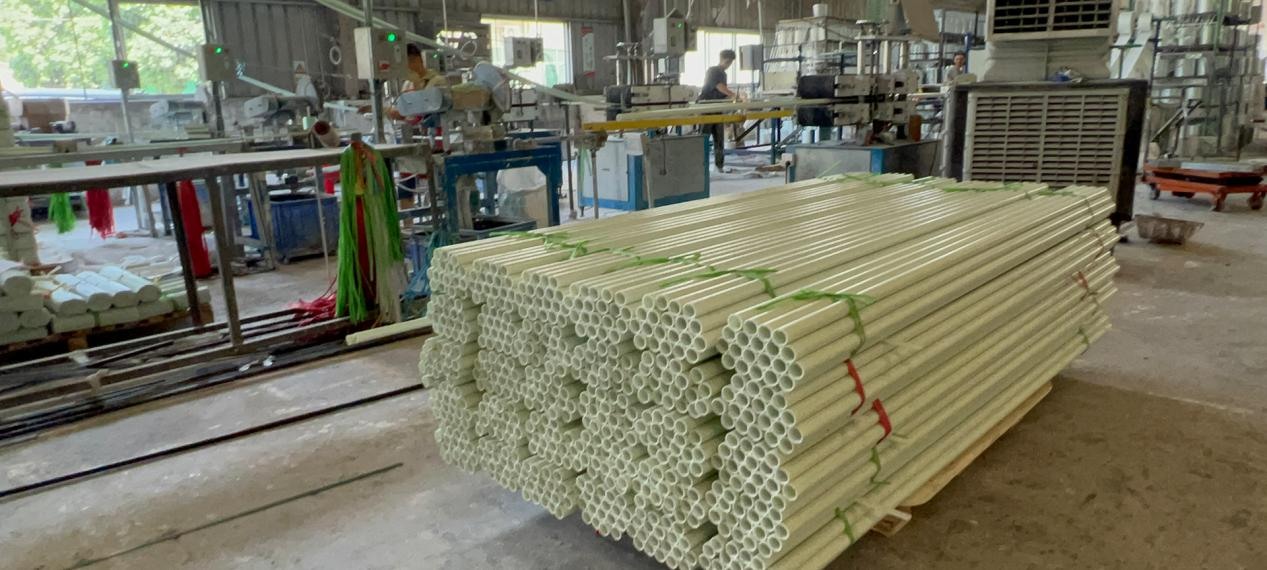
Yes. A fiberglass stake cuts clean in two minutes. Cut it wrong and you'll itch for a week.
Use an angle grinder with a cutoff wheel, a hacksaw, or a circular saw with a carbide blade. Score the surface first. Then roll the stake and keep cutting. A hand saw works too, but the resin dulls blades faster than wood does. Keep the blade sharp and don't force it.
Now the part nobody warns you about. Cutting fiberglass makes dust. Glass dust. It works into your skin and stays there. It gets into your lungs if you're sloppy. Wear a respirator, not a cloth mask. Long sleeves and gloves. Cut outside, or run a vacuum on the grinder. I found that out in 1994, cutting forty stakes in a closed garage. I don't recommend it.
After the cut, seal the end. The cut face exposes raw glass that wicks moisture up the fibers. On a stake buried in wet ground, that's a slow path for water into the part. A dab of resin or polyurethane sealant closes it. A rubber end cap does the same job on the top end.
One buying trick. If you need two 5 ft stakes, order 10 ft fiberglass tree stakes and cut them in half. You pay less per foot on the long stock, and one end of every piece comes off the factory line already clean. I've run tree-planting jobs that way for years.
And if you're searching for 8 ft fiberglass tree stakes near me, buy online instead. Garden centers don't stock the long lengths. The fiberglass tree stakes home depot carries top out around six feet. The 8 footers and longer almost always ship direct from a manufacturer or a full-carton supplier. Freight costs the same for eight stakes as for fifty. Make the order count.