 EN

Quomodo Fabricantem Tuborum ex Fibra Vitrea Examinare, Ne Urearis

I've Been Burned by the Wrong Fiberglass Tube Manufacturer — Twice
I've been in composites since 1989. I've bought fiberglass tube from suppliers in five countries. I've also sent two truckloads of reject tube back to a fiberglass tube manufacturer in 2003 and paid the freight on both loads. That little education cost me about forty thousand dollars and a client I never won back.
Most procurement teams vet a supplier the same way they pick paper. They scan the website. They collect three quotes. They sign with whoever lands in the middle. That works fine for copy paper. It gets somebody hurt when the tube is carrying load or sitting in a corrosive ditch.
The gap between a competent fiberglass tube manufacturer and a sloppy one is never on the data sheet. It shows up on the floor. Check the resin drum. See whether the operator running the pultrusion line can read an exotherm before it runs away on him. I'm going to walk you through how I screen suppliers now, after thirty-five years of paying tuition to this industry.
The Resin System Tells You Everything
Ask the fiberglass tube manufacturer what resin they run for your application. Then shut up and listen.
If the answer is "iso resin" and nothing else, leave. If they can name the brand, quote the styrene content, explain why they switched from a bisphenol-A vinyl ester to a novolac epoxy vinyl ester for your temperature range, sit down. You're talking to someone who actually formulates. That's the person you want building your tube.
I walked a plant in Jiangsu in 2011. They were running pultruded tube for a cooling tower project. Beautiful operation. Clean creels. The line supervisor told me the exact MEKP percentage he was pushing and why he'd backed it off half a point when the shop temperature climbed in summer. That's a shop that controls its process. We bought from them for nine years.
Resin choice decides whether your tube survives ten years in a scrubber or fails in eighteen months. A polyester pultruded tube is cheap. It's also wrong for anything carrying acidic condensate. A proper vinyl ester tube costs more. It also doesn't crack along the glass when the temperature spikes. If the supplier can't explain that tradeoff in plain language, they're buying resin by the drum and hoping for the best.
Walk the Floor or Don't Sign the Contract
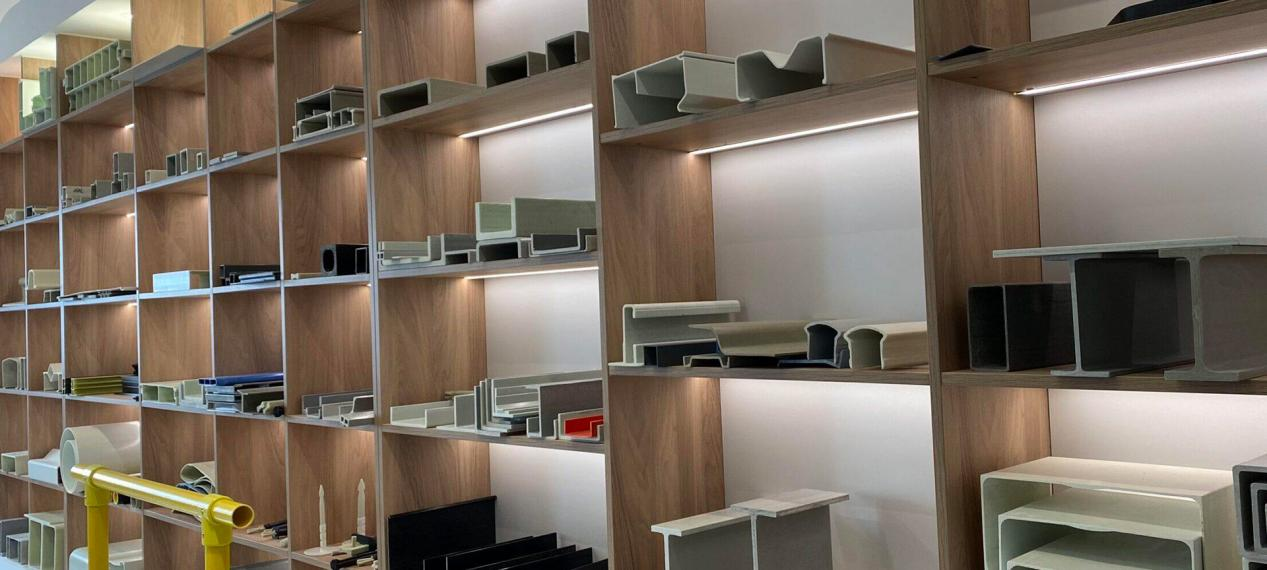
I do not buy structural tube from a fiberglass tube manufacturer I have not walked through. Period.
Tu potes dicere plus in viginti minuta in area quam in viginti horis per epistulam electronicam. Aspice cestos ambulantes. Suntne mundi? Estne filum fractum accumulatum sub ductibus? Officina quae permittit ut sordida sub cassa formante accumulentur est officina quae permittit ut vitia in pariete accumulentur. Aspice lavacrum resinis. Estne altitudo constans? Estne temperatus temperatus? Viscositas resinis mutatur cum temperatura. Humectatio mutatur cum viscositate. Contentum vitri mutatur cum humectatione. Fabricator qui non regit temperaturam lavacri non regit quid in tubo sit. Hoc non est opinio. Hoc est physica.
Ego visitavi unam fiberglass tube manufacturer in 2016 that ran a beautiful-looking filament winding line. Spotless floor. New equipment. The sales guy was sharp. But the cure oven had a cold zone the operator didn't know about. I caught it because I ran my hand along a finished tube and felt a soft spot three meters in. Green strength was there but the back half of the part was undercured. They'd been shipping that tube for a year. Nobody had complained yet. Somebody would have.
We didn't buy from them. The competitor two provinces over had an older line but a cure schedule printed and taped to the control panel, with oven temperatures logged every shift. Old equipment run by people who care beats new equipment run by people who don't. Every single time.
Spec Sheets Lie. Barcol Readings Don't.
Universus fiberglass tube manufacturer hands you a spec sheet. They all look the same. Tensile strength, flexural modulus, glass content, Barcol hardness, all in neat columns.
Half of them are copied from a competitor's website. I've caught that twice.
The spec sheet tells you what the material is supposed to do. It does not tell you what shipped on the truck. The only way to know what shipped is to test it. Barcol hardness is the cheapest, fastest indicator you have. A Barcol 934-1 impressor runs about three hundred dollars. It tells you in five seconds whether the tube is cured. Undercured tube reads low. Undercured tube creeps under load. Undercured tube fails in service.
I make every new fiberglass tube manufacturer send a sample before the first production order. I put a Barcol on it. I burn a small piece and look at the ash. If the glass content looks off, I send it to a lab for ignition loss. That costs me about eighty dollars and a week. It has saved me from two bad suppliers.
Un fornitor in 2019 mi inviò un tubo che indicava Barcol 38 su una specifica che richiedeva minimo 45. Lo chiamai. Dissero che era entro la tolleranza. La tolleranza era più o meno cinque. Trentotto non è entro la tolleranza di quarantacinque. Discussero. Riattaccai. Questo è un produttore di tubi in fibra di vetro che o non esegue prove o non se ne cura. In ogni caso, per me era finita.
Il problema della resistenza verde di cui nessuno parla
Ecco qualcosa a cui la maggior parte degli acquirenti non pensa mai. Il tubo in fibra di vetro ha una resistenza verde. È la resistenza che il pezzo possiede appena uscito dalla matrice, prima della post-cura completa. Un’officina competente gestisce la resistenza verde perché è ciò che permette al tubo di superare il taglio e le operazioni di manipolazione senza creparsi.
Unus malus eum ignorat. Tubus a linea excedit mollis. Secatur. Imponitur. Sub suo pondere in armario deformatur. Cum ad te pervenit, bene videtur, sed parietes microfissuras internas habent quas videre non potes. Istae fissurae sub pressionis cyclis aperiuntur. Sic tubus qui inspectionem initialem superavit, post sex menses in usu deficit.
Hoc didici anno 2006. Habuimus partem tuborum pultrusorum quae in applicatione structurale secundum lineam spiralem fregit. Investigatio tres menses duravit. Causa prima erat vis viridis nimis infima ad sectionem, coniuncta cum velocitate tractatoris nimis rapida pro temperatura matricis. fiberglass tube manufacturer velocitatem lineae auxerant ut diem expeditionis attingerent. Nobis nemo dixit. Tubus omnes probationes quas in acceptatione fecimus superavit. In campo defecit.
Interroga suppeditatorem tuum de velocitate tractationis et temperatura matricis. Si respondere non potest, variabile quod maxime refert non regit.
Differentiae pretiorum quae revera aliquid significant
Afiberglass tube manufacturer quoting thirty percent under the market is not giving you a deal. they're cutting something.
I've seen it all. lower glass content. cheaper resin. thinner wall. skipped post-cure. the cheapest quote i ever took was from a supplier in 2014. the tube looked identical to the spec. same od. same color. same wall thickness on the caliper. the resin was ortho polyester relabeled as iso. the glass content was four percent low. the tube failed hydrostatic testing at sixty percent of rated pressure.
Standard pultruded vinyl ester tube runs in a predictable band. i'm not going to quote you today's number because resin pricing moves. but when one fiberglass tube manufacturer comes in twenty-five percent below the pack, something is missing from the wall or the resin or the cure. pay the fair price. the money you save on the front end you spend five times over on field failures, expedited replacements, and the conversation where you explain to your boss why the project is delayed.
The acceptance test most buyers skip
Most buyers do incoming inspection on dimensions. OD, wall thickness, length, straightness. That's it.
That's not enough. Dimensional inspection catches the tube that's the wrong size. It does not catch the tube that's the right size and the wrong material.
I run three tests on every new supplier's first shipment. Barcol hardness for cure. Ignition loss for glass content. And a visual on the cut end under a ten-power loupe for voids and dry spots. Dry glass in the wall means wet-out was poor. Voids mean the resin bath was starved or the vacuum was off. A shop with good process control produces a cut end that looks like solid material. A bad one produces a cut end that looks like fiberglass insulation with some resin dribbled in.
The loupe cost me twelve dollars. It has rejected more tube than any other tool in my kit.
What I Demand From a Supplier Now
I've boiled my requirements down over thirty-five years. A fiberglass tube manufacturer earns my order when they can do four things.
Dic mihi systema resinis nomine et cur id elegerint. Sine me per aedem ambulare sine ductore qui me a fornace curandi avocet. Mitte specimen quod meum Barcol et meum lentum superat antequam prima series productiva incipiat. Et annota velocitatem tractionis et temperaturam matricis per singulas turnas, in charta quam legere possim.
Hoc est omne. Quattuor res. Plurimae officinae non possunt omnia quattuor facere. Quae vero possunt, pretium suum merentur, quia alterum est illa vocatio telefonica ad duas horae noctis nuntians tubum fractum esse et systema cessasse.
Ego hanc vocatum accepi. Nunc non accipio. Experire tuum fiberglass tube manufacturer sicut proiectum tuum in eo pendet. Sic est.