 EN
EN

Pultruded Carbon Fiber Tube vs Steel: What I Tell Buyers Before They Order
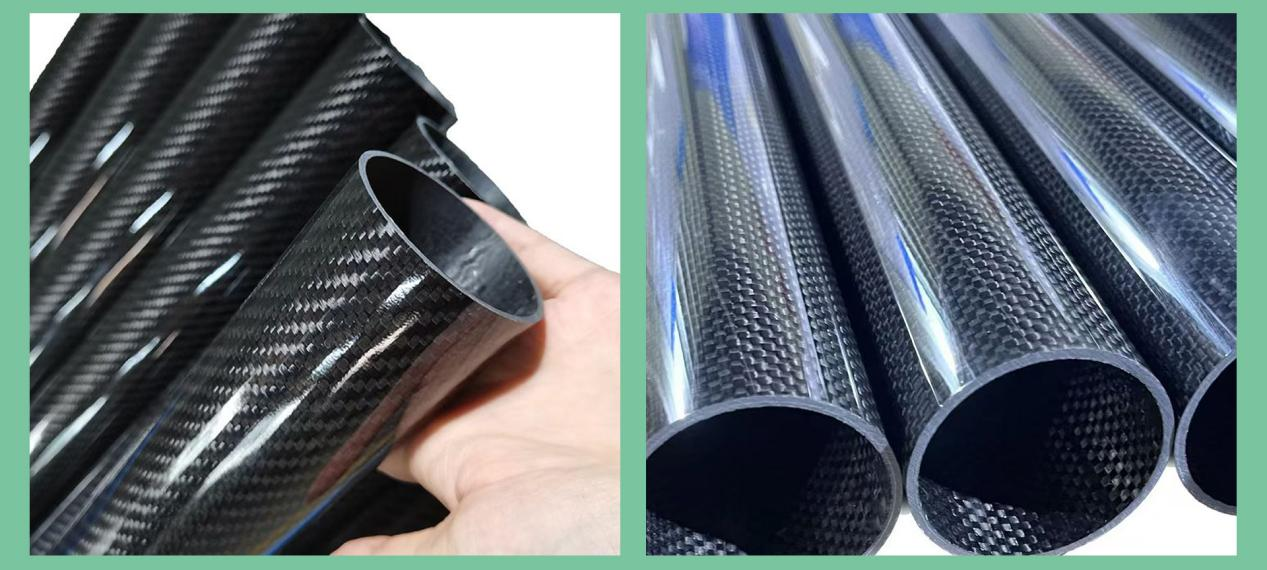
I have been in composites since 1989. Hand lay-up first, then pultrusion from the mid-nineties onward, and I have pulled more line than I want to remember. Every week somebody calls and asks the same thing. Can a pultruded carbon fiber tube replace the steel tube in their build?
Sometimes the answer is yes and it is not even close. Sometimes I talk them out of it, and I lose the order. That is fine. A tube that fails in the field costs both of us more than a tube I never sold.
Density Is the Whole Argument
CFRP density vs steel is the first number I put on the table. Carbon fiber reinforced polymer lands at 1.55 to 1.60 g/cm³. Mild steel is 7.85. Aluminum sits at 2.70. Swap one for the other at identical dimensions and you drop roughly 80 percent of the weight.
But nobody actually buys that way. You redesign around the material, and when you do, the honest saving sits between 55 and 70 percent at equal bending stiffness. Still enormous. On a two-meter mast that is the difference between one man carrying it and two men cursing.
That gap is why the pultruded carbon fiber tube shows up first whenever a buyer has a hard weight ceiling and no room left in the design.
Here is the part most suppliers skip. Steel has a modulus of 200 to 210 GPa. Standard-modulus pultruded CFRP runs 130 to 165 GPa in the axial direction, depending on fiber volume fraction. Per kilogram, carbon wins by a factor of eight or so. Per unit of cross-section, steel is stiffer. If your job is space-constrained rather than weight-constrained, steel is the better call and I will say so on the phone.
Strength Numbers That Mean Something
Carbon fiber tube strength is where the marketing gets silly. Sales sheets quote 3,500 MPa because that is the filament tensile of the raw fiber, not the laminate. Ignore those.
A real unidirectional carbon fiber pultruded profile at 55 to 65 percent fiber volume gives you 1,500 to 2,400 MPa axial tensile with T700-class roving. Q235 steel yields around 370 to 500 MPa. Divide by density and the specific strength gap lands somewhere around 15 to 20 times. That is the number worth designing against.
Transverse tensile is a different story, and it is the number nobody prints. Maybe 30 to 60 MPa, because it is the resin carrying the load, not the fiber. Interlaminar shear runs 40 to 70 MPa. That is where failures come from. A pultruded carbon fiber tube in service almost never fails in axial tension. It fails because something squeezed it sideways.
What Pultrusion Gives You, and What It Steals
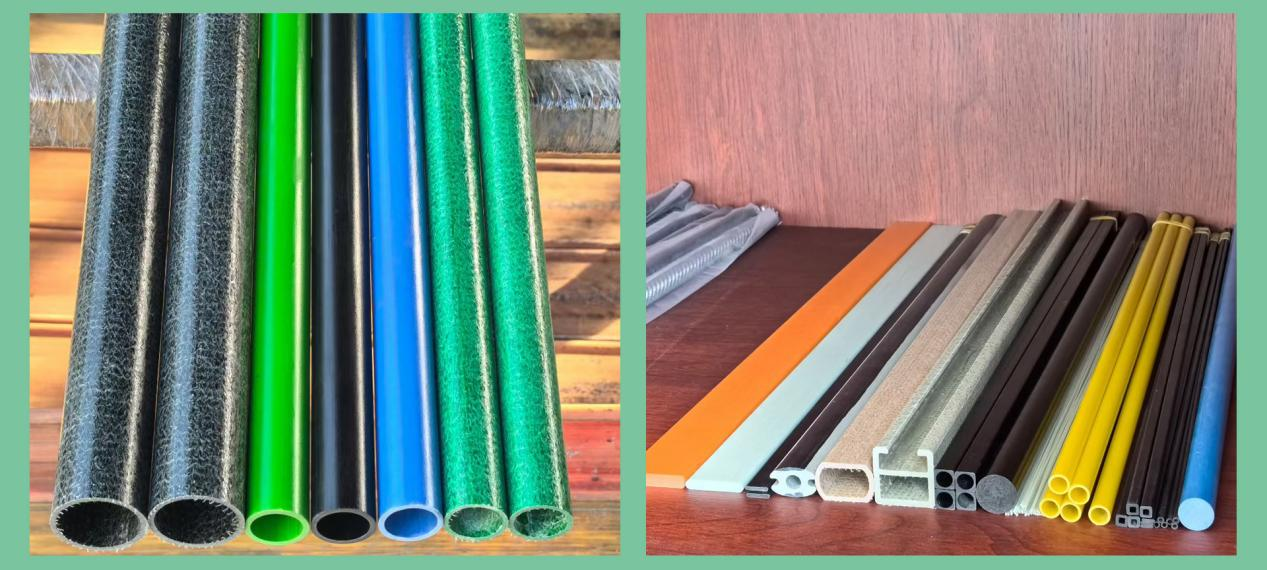
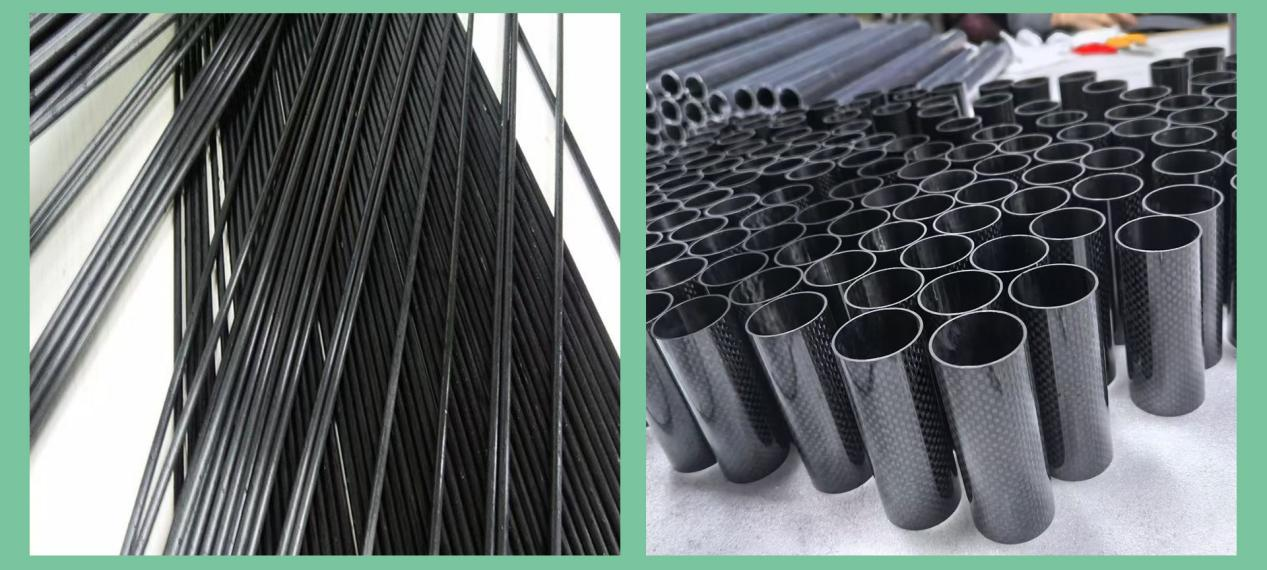
Pultrusion drags continuous roving through a resin bath and into a heated die. Everything runs at zero degrees. You get the highest fiber volume fraction available in any commodity process, and axial stiffness that roll-wrapped tube cannot touch at the same price.
What you do not get is hoop strength. There is usually a surface veil, sometimes a light stitch mat in heavier sections, and that is about it. Roll-wrapped tube carries ±45 degree layers. Pultruded carbon tube basically does not. So it hates torsion, and it hates concentrated radial loads.
I watched a customer's 14 mm mast split along its entire length in 2019. A hose clamp, tightened with a battery drill. The clamp never slipped. The tube failed first, in hoop, at maybe a third of what it would have carried in pure bending.
That sound stays with you.
Picking a Size Without Embarrassing Yourself
Sizing is where I see the most expensive mistakes. Every pultruded carbon fiber tube gets sold by OD, ID and length, and buyers fixate on the first two while the third one decides whether the thing works at all.
A 6mm carbon fiber tube is the small end of the catalog. Typically 6 mm OD, 1 mm wall. Drone arms on light quads, tent pole tips, RC pushrods, actuator links. At 1 mm the laminate is thin enough that a careless drill bit delaminates the exit side, and there is no repairing it. Back it with a plug or accept the splintering.
The 14mm carbon fiber tube is the size I quote most. 14 x 12 or 14 x 10, sometimes telescoping sets. Camera sliders, pruning poles, survey poles, kite spars, antenna masts. Wall thickness at this diameter is the real decision, and most people go too thin. 1 mm on a 14 mm tube is a drinking straw under bending load.
A 2000mm carbon fiber tube changes the conversation entirely. At two meters, geometry takes over from material. A 14 mm tube loaded at the tip is governed by buckling, not strength. Euler gives you P critical = π²EI / (KL)². Double the length and critical load drops by four. I have had buyers spec 2000 mm of 6 mm tube for a 5 kg tip load. The math said no before I picked up the phone. It would have bent like a noodle and then folded.
For telescoping work, ask about ovality and straightness in writing. One millimeter per meter is normal. OD tolerance of ±0.1 to 0.2 mm is achievable, and cheap suppliers will not hit it, which is how your sections jam halfway out in the field.
When 4 Inch Is Right, and When It Is Stupid
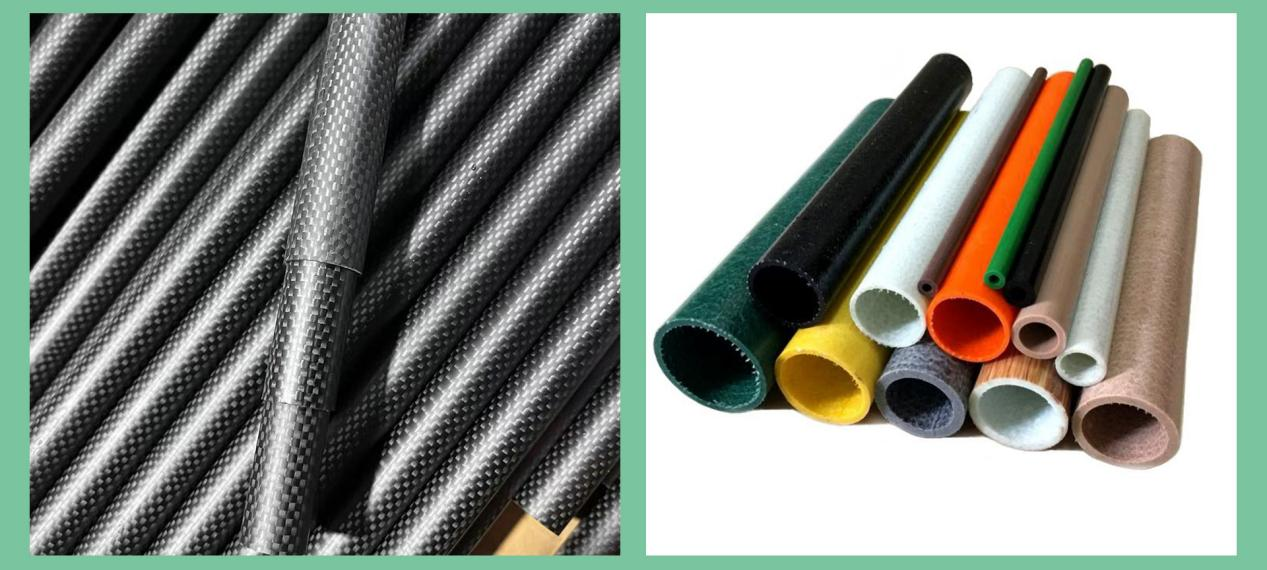
A 4 inch carbon fiber tube is 101.6 mm OD. That is structure, not hardware. You need 4 to 6 mm of wall at minimum or you get local buckling long before you approach the material limits.
Tooling for that size is expensive. Big die, heavy puller, and the exotherm inside a thick section is its own problem. Resin at the center of a 6 mm wall can exotherm hard enough to crack the laminate from the inside out. You will never see it from the outside.
We section and inspect every thick-wall run. On one order in 2021 I asked for that after seeing surface quality that looked too good, and found center cracking in three samples out of ten. Rejected the whole batch. The supplier argued for a week.
At 4 inch, ask yourself whether you need carbon everywhere. A hybrid lay-up, carbon outside for stiffness and glass inside for cost and impact resistance, often delivers 80 percent of the performance at half the price. I say this constantly. It costs me margin, and I keep saying it.
How Buyers Destroy Their Own Tubes
Clamps are the number one killer. Never clamp directly onto a pultruded surface. Bond an aluminum ferrule, fit an internal plug, or use a split block with a rubber liner. The tube does not care about your clamp torque.
Then there is galvanic corrosion. Carbon fiber is electrically conductive and nobler than aluminum or steel. Bolt a pultruded carbon fiber tube to an aluminum bracket in a wet environment and the bracket dissolves. I have seen masts come back after eighteen months offshore with the fitting reduced to grey paste. Isolate with a glass veil layer, or use stainless with proper sealant and accept the maintenance interval.
Cutting is the third one. Wet cut, dust extraction, real respiratory protection. Carbon dust is conductive and it travels. A shop I visited in 2017 killed a CNC controller because they were slotting tube on the same bench where they assembled electronics. The dust settled inside the cabinet and shorted the board. Do not cut carbon anywhere near your assembly area.
Then heat. Standard epoxy systems in pultrusion have a Tg somewhere between 80 and 120 °C. A black tube left in direct sun in Xinjiang will get close to that before you ever load it. Stiffness drops as you approach Tg. That is not a warranty claim, that is physics.
What It Costs, Roughly
Buyers always ask for a number before they will tell me the application. So here is the range, and it moves with roving prices, which have been volatile since 2022.
A 6 mm tube in T300-class roving lands around 3 to 6 dollars a meter at volume. The 14 mm sizes run 8 to 15. Step up to T700 and add 30 to 40 percent, because the roving itself costs more, not because anyone is padding. A 4 inch tube with a 5 mm wall is 120 to 200 dollars a meter and you are paying for die time as much as material.
Seamless steel tube of comparable OD sits at 2 to 4 dollars a meter. That ratio shocks people who only read the density chart. A pultruded carbon fiber tube is five to thirty times the material cost, and you buy it because the weight saving pays for itself downstream, in freight, in installation labour, in the motor you no longer need, or in the payload you can now carry.
If none of those apply, buy steel. I mean that.
What to Ask Before You Send the PO
Ask for the roving grade. T300, T700, or something unlabeled out of a broker's warehouse. Ask for fiber volume fraction, and if they cannot give it, they never measured it. Ask which resin system, epoxy or vinyl ester, and what the Tg is. Ask for straightness tolerance in writing.
Ask for a full-length sample, not a 200 mm offcut. Offcuts hide bow, twist, and die lines that only show up over two meters. Ask whether they test to ASTM D3916 or ISO 527, or whether they just pull one coupon a month and hope.
A pultruded carbon fiber tube manufacturer who cannot tell you the tow size of the roving in their own die is guessing, and you are the one who pays when the guess is wrong.
Also settle tooling and MOQ up front. Standard sizes ship in days. A custom 4 inch profile with a 5 mm wall means a new die, three to five weeks, and a tooling charge. Nobody enjoys hearing it, but it beats a surprise on the invoice.
Steel Is Not Dead
I use steel. It is cheap, it is tough, it takes abuse, UV does nothing to it, and you can weld it in a field with a generator and a grinder.
Carbon is the answer when weight is the problem you cannot solve any other way. A pultruded carbon fiber tube does something no metal can do: it carries serious load at a fifth of the mass. Respect where it is weak, and it will outlast the steel you replaced.
Disrespect those limits, and you will be on the phone with me in eighteen months, asking why it broke.